
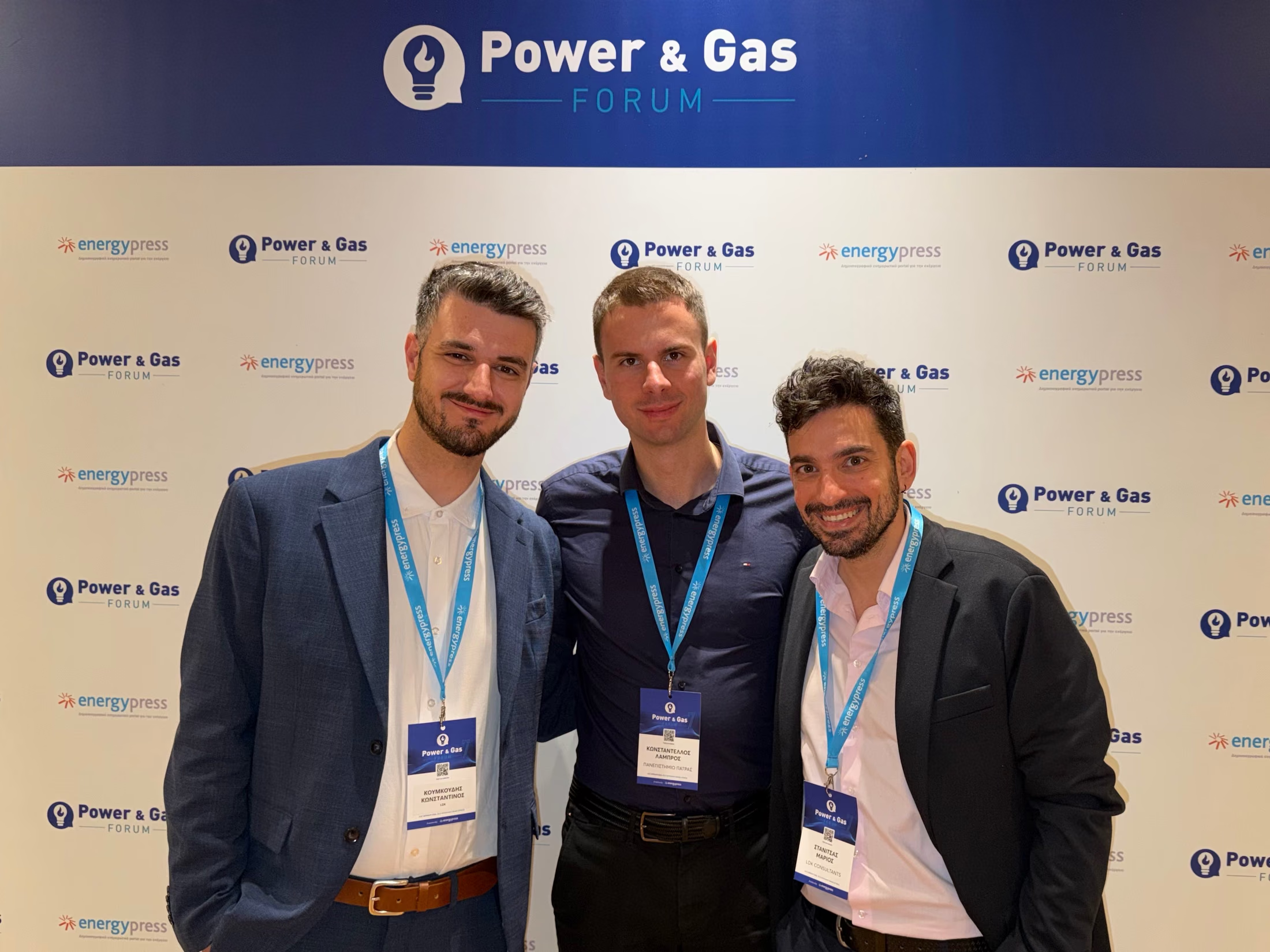
On 6–7 April 2026, I attended the 7th Power & Gas Forum in Athens, organised by energypress. The forum focused on the changing structure of the Greek electricity and gas markets, including grid development, system adequacy, flexibility, storage, gas infrastructure, retail market evolution, and the growing impact of large electricity consumers such as data centres.
What stood out to me most is that the Greek energy transition is moving from a capacity-growth discussion to an implementation-quality discussion. The key question is no longer only how much renewable capacity can be added, but whether the system can absorb, dispatch, balance, and value this capacity efficiently.
Key points I took from the forum:
- Grid capacity is becoming the central constraint. Renewable deployment, electrification, storage, and new demand from data centres all depend on how quickly transmission and distribution infrastructure can be reinforced, digitalised, and operated with greater visibility.
- Curtailment is becoming structural. As RES penetration increases, curtailment can no longer be treated as an occasional operational issue. It is becoming a signal that flexibility, storage, forecasting, and market design need to evolve together.
- Battery storage is shifting from policy topic to operational asset class. The value of BESS will depend not only on installed capacity, but on dispatch strategy, multi-market participation, forecasting quality, and the ability to manage revenue uncertainty.
- Data and metering infrastructure are becoming market enablers. Smart meters, real-time data, and advanced energy management tools are essential for unlocking demand response, dynamic retail products, and more efficient system operation.
- Gas remains part of the transition discussion. Even as renewables and storage expand, gas infrastructure continues to play a role in security of supply, adequacy, and system flexibility during the transition period.
My main takeaway is that Greece is entering a more mature and technically demanding phase of the energy transition. The challenge is no longer only project development, but the coordinated operation of networks, markets, storage assets, flexible demand, and real-time data systems.