
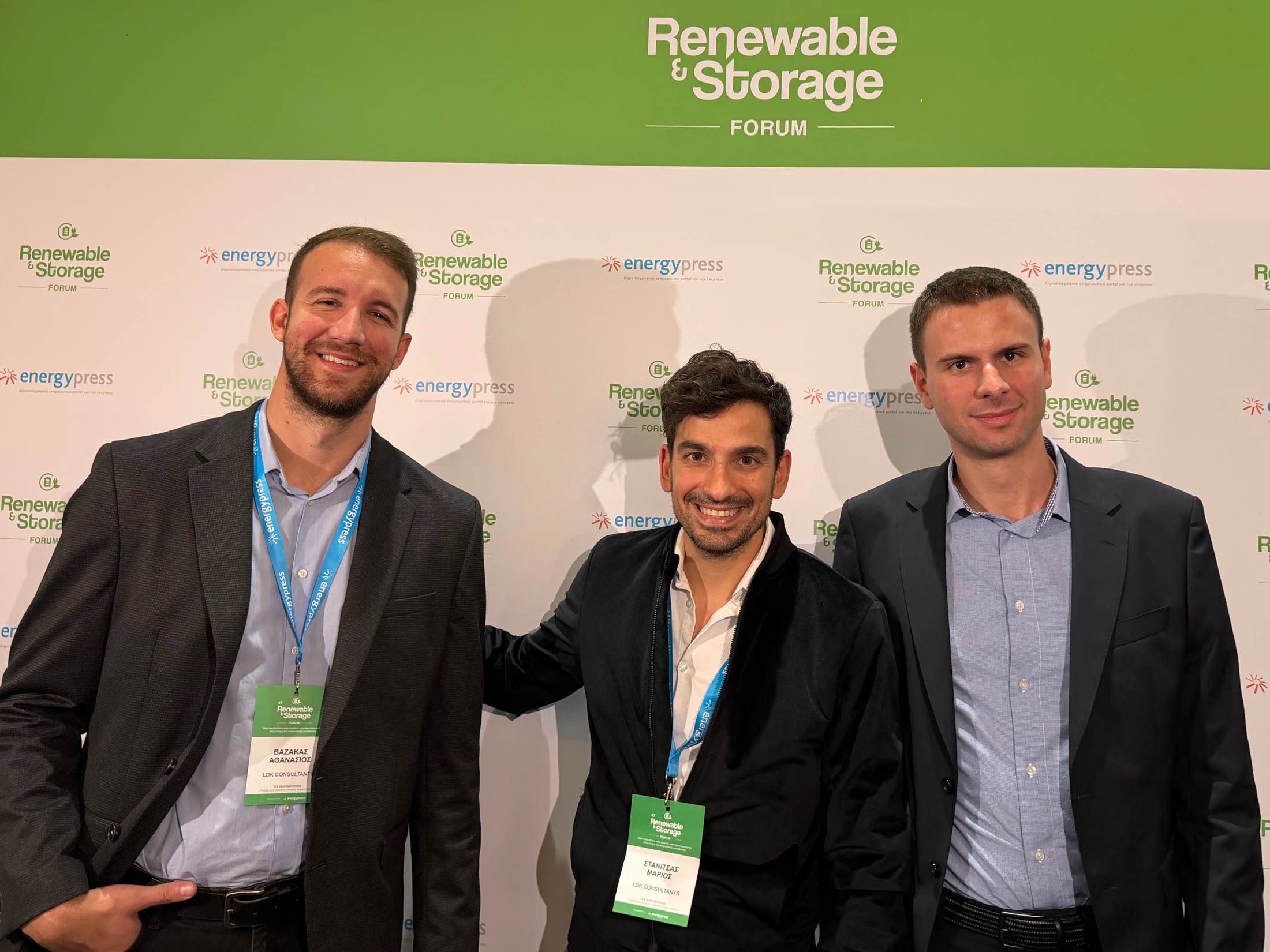
On 22–23 October 2025, I attended the 7th Renewable & Storage Forum in Athens, organised by energypress. The forum focused on the next stage of the Greek energy transition, with particular emphasis on renewable energy development, storage deployment, grid constraints, curtailment, auctions, investment conditions, and the regulatory framework for new market participants.
The discussion made clear that storage is no longer treated as a future add-on to the power system. It is becoming one of the key tools for managing high renewable penetration, reducing curtailment, supporting system flexibility, and improving the economic performance of renewable assets.
Key points I took from the forum:
- Stand-alone BESS is becoming a central part of the Greek energy mix. As projects move from auction results to implementation, the focus is shifting toward connection conditions, dispatch strategy, market access, and long-term revenue visibility.
- Behind-the-meter storage is becoming increasingly relevant for existing PV parks. For assets facing curtailment, negative prices, or constrained export capacity, co-located BESS can improve operational flexibility and help recover otherwise lost value.
- Curtailment is changing the economics of renewable projects. The value of a RES asset can no longer be assessed only through annual production. Timing, grid availability, market prices, and flexibility options are becoming equally important.
- Regulatory clarity is critical for investment. Storage projects require stable rules around licensing, grid connection, market participation, charging behaviour, and revenue stacking in order to become bankable at scale.
- The market is becoming more optimisation-driven. As storage, intraday trading, balancing markets, and hybrid project structures become more important, engineering analysis needs to be combined with market modelling and operational decision-making.
My main takeaway is that the Greek renewable sector is entering a phase where flexibility will define value. The most interesting projects will not necessarily be those with the highest installed capacity, but those that can operate intelligently within a constrained and increasingly dynamic power system.