
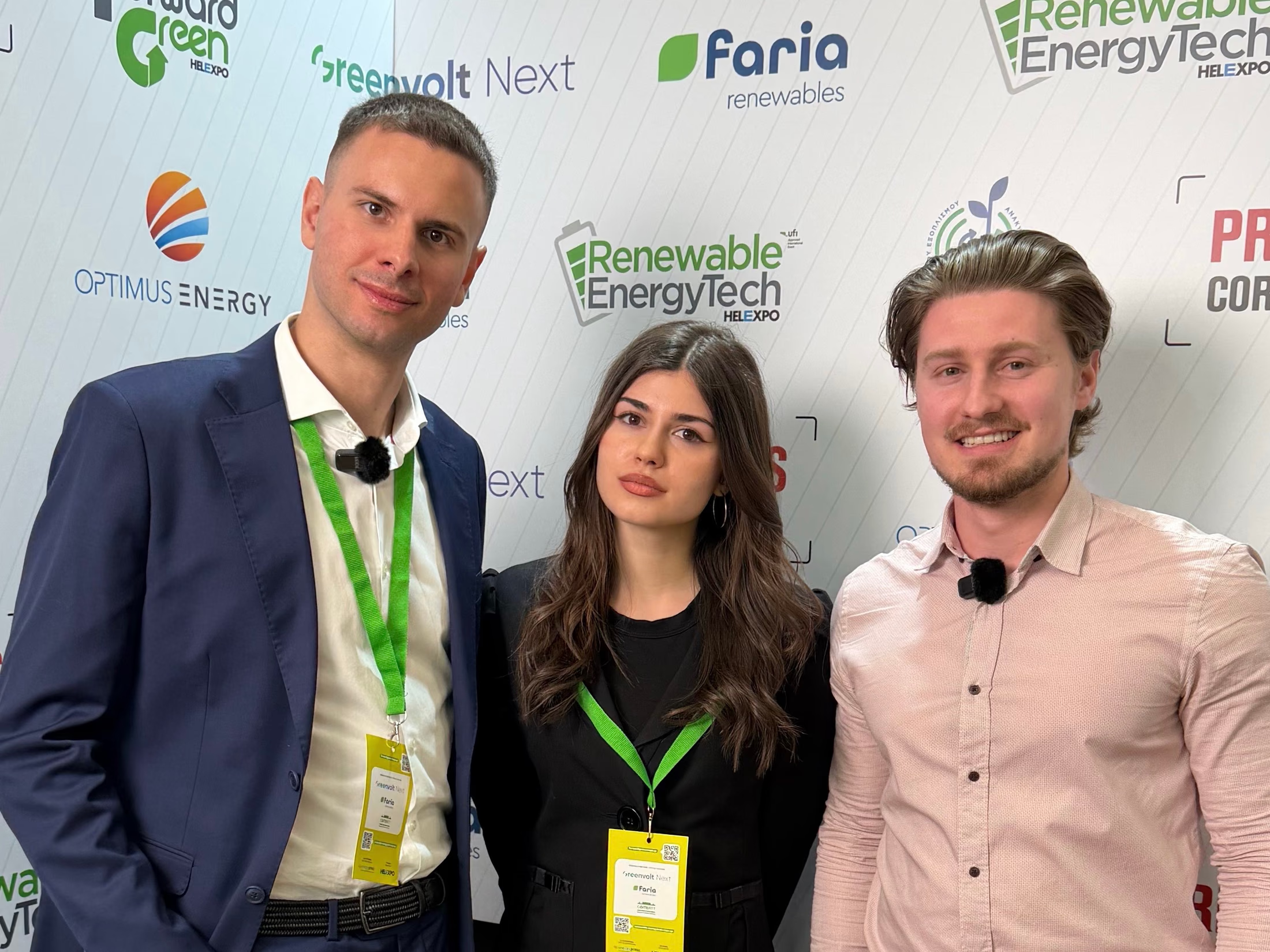
On 26–28 March 2026, I attended Renewable EnergyTech in Thessaloniki, the green and smart energy exhibition held at the Thessaloniki International Exhibition Centre alongside Forward Green Expo. It was a packed schedule of meetings and conversations across RES, BESS, and offshore wind.
What stood out to me most is how far storage has moved in the conversation. It is no longer treated as an afterthought to renewable generation, but as a central part of how projects and portfolios are now designed.
Key points I took from the event:
- Curtailment is shaping project decisions. As renewable penetration rises, curtailment is no longer a marginal operational issue; it is becoming a primary input into how new capacity is planned and valued.
- Storage delays are a recurring constraint. The gap between storage that is planned and storage that is actually connected and operational came up repeatedly, with direct consequences for project economics.
- Flexible portfolios are becoming the norm. Combining generation, storage, and flexible offtake into a single portfolio is increasingly how developers manage volatile prices and constrained grids.
- Self-consumption is reshaping how businesses think about energy costs. For commercial and industrial consumers, maximising self-consumption is shifting from a sustainability gesture to a core part of the cost calculation.
- Offshore wind is entering the Greek conversation. Alongside the established RES and storage topics, offshore wind featured as a longer-horizon part of the portfolio discussion.
Beyond the meetings, I also had a conversation with Enri Skourti and the ZEPHIROS team about a question that comes up often: what does a young engineer actually gain from being present at events like this? Engineering school gives you the fundamentals, but the market is where you develop them. Standards and business models move faster than any curriculum, and being in the room with the people building projects is how you build the reflexes to keep up.
This is a theme I have come back to since my student years. As Chairperson of EESTEC LC Patras, I argued in an earlier interview that the soft skills built outside the curriculum — communication, teamwork, adaptability — are often what employers value most. A few years and one career step later, on the exhibition floor rather than in a lecture hall, the same idea held up.
My main takeaway is that the sector is at a turning point where the technical questions — around curtailment, storage, and flexibility — increasingly demand adaptability and collaboration rather than capacity alone. That is also exactly the environment in which time spent in the market, early, pays off for a young engineer.